
A rainy afternoon, a gap after school, a slow weekend morning — your kids still want to move. Good news: indoor active games for kids need only a little space and some simple household items. No complicated prep, no special shopping trip.
You can set up indoor active games in minutes. Try solo play for one child, sibling games for two, or parent-child play for the whole crew. A few indoor children's games work in a hallway. Others need more room, so check your space first. If you have a TV and want a screen-based option, PlayPop 8 is one choice to consider alongside the non-digital games.
These indoor activities help kids stay active without turning your living room upside down. Pick one game, press play, and see how it goes.
Key Takeaways
Get indoor active games ready in just a few minutes using easy things you already have at home.
Pick games that fit your space, how many players you have, and how loud you can be.
Begin with games that need no setup, like Mirror My Moves or Music and Freeze.
Add things like floor markers or soft items to make it more varied.
Think about motion games on a screen, like PlayPop 8, as another choice.
Pick the Right Indoor Game for the Moment
Not every activity fits every room or every group. A quick check before you start saves you from stopping halfway through. Weigh five things: floor space, how many people will join, what your child enjoys, how much setup you want, and how loud the game gets.
Check Space, Players, and Noise
Walk the room first. Clear a path wide enough for movement, and move anything breakable out of reach. Some indoor games need a long stretch of floor. Others work fine in a small corner. Be honest about which one you have.
Player count matters too. Solo games suit one child who wants quiet focus. Sibling games need turn-taking. Parent-child games work best when you can match your child's pace. A few indoor children's games really need three or more players, so save those for a full house.
Think about noise as well. Jumping and stomping carry through floors. If someone is napping or working nearby, choose a quieter option. Soft-item toss and slow movement games keep the volume down.
Match Prep and Interests
Ask yourself how much setup you want. Most indoor active games for kids need nothing beyond a clear floor. Prop-based games take a few extra minutes. Pick the level that fits your afternoon.
Then follow your child's interests. A kid who loves music will enjoy freeze dance. A kid who likes challenges will enjoy memory sequences. The best indoor kids' games are the ones your children actually want to play again.
Age matters here. Some games suit older kids who can follow multi-step rules. Others work better for younger children. Winter indoor games for preschoolers, for example, often work best as short, simple rounds. The same holds for indoor games for preschoolers in general — keep rounds brief and rules light.
If you are unsure, start with the simplest option. You can always add difficulty later. The best indoor children's games grow with the group. A calm round of indoor play now beats an ambitious plan that falls apart.
Start with Simple Indoor Children's Games
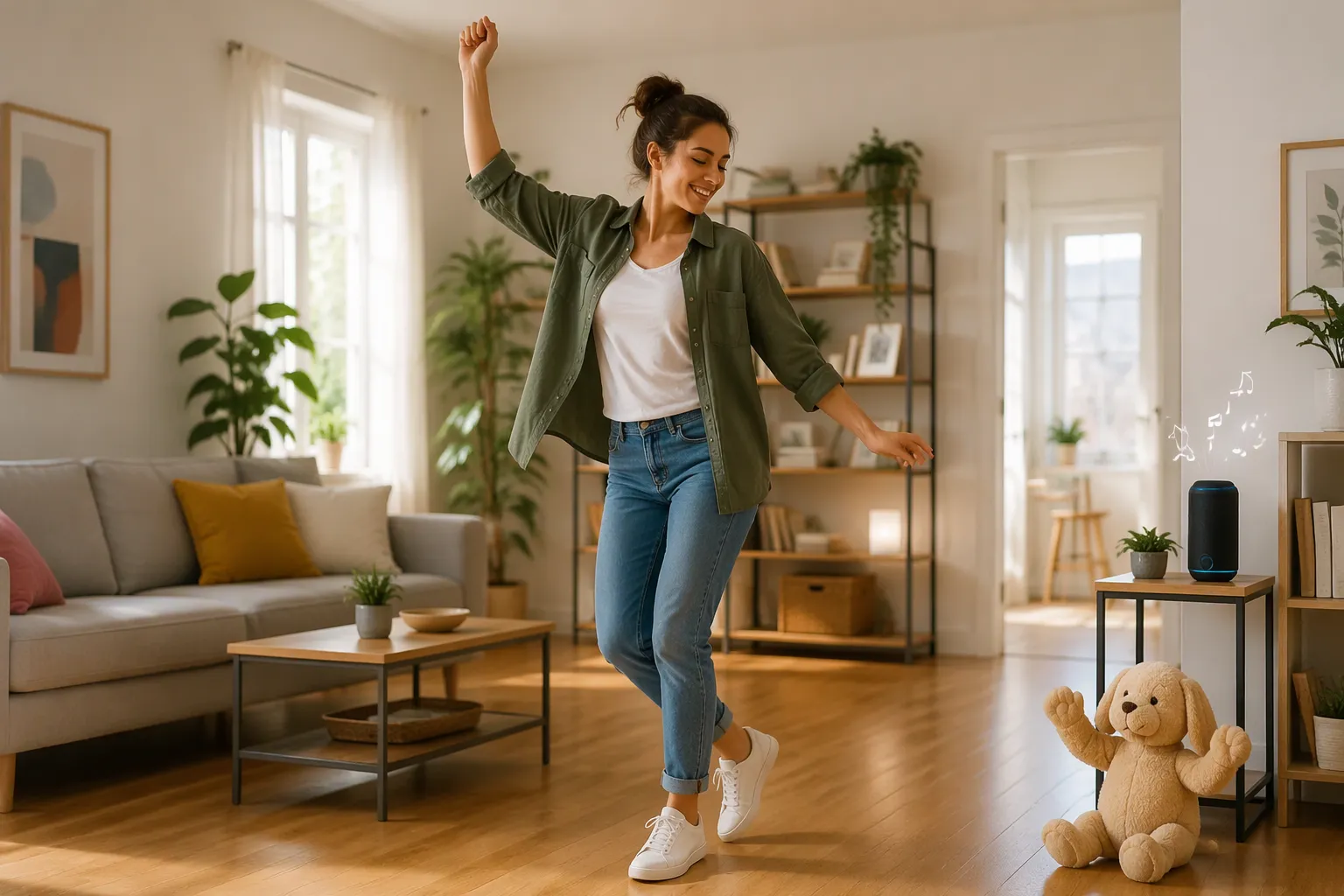
Some afternoons need zero prep. These three indoor children's games use nothing but your bodies and a little attention. They work as active indoor games for a rainy day, a sibling standoff, or a quick break before dinner. Treat them as independent household ideas — they are not official PlayPop games or built-in features.
Mirror My Moves
No materials needed. Clear a small patch of floor and stand facing your child. You begin as the leader: raise one arm slowly, tilt your head, lift a knee. Your child copies each move like a mirror. After a few rounds, swap roles and let them lead.
Keep movements comfortable and slow at first. This game needs a partner, though one child can adapt it by copying a video or a stuffed animal's "poses" you set up. To adjust difficulty, speed up the tempo or add two moves at once — a wave plus a step. For a calmer pace, slow everything down and hold each pose for a few seconds. Skip big jumps if the room is tight.
Music and Freeze
You need a music source and enough floor to sway safely. Start the music and everyone moves — dancing, marching, wiggling. Pause the track and everyone freezes in place. Hold the freeze for a beat, then start the music again.
This version has no elimination, so every kid stays in the whole time. That keeps it among the best indoor kids' games for mixed ages. Play solo by freezing along with the song yourself. To adjust, change the freeze length or pick faster and slower tracks. A slow song makes a gentle round; a fast one turns it into lively freeze dance. Two rounds of freeze dance usually satisfy most kids.
Remember the Movement
This one builds a sequence. Stand in a circle and make one simple action — clap twice, for example. Your child repeats it and adds one more, like a stomp. Keep taking turns and growing the chain until someone forgets. No elimination needed; just restart with a fresh sequence.
It works with two or more players, and one child can play by adding moves alone. To adjust, cap the sequence at three or four moves for younger kids, or allow bigger actions for a challenge. This is one of those fun indoor children's games that quietly stretches attention without feeling like a test.
These three make excellent fun and engaging indoor games for spontaneous indoor play. They need no equipment, no cleanup, and no planning. Rotate them with the prop games below when you want variety, and you have a full afternoon of fun kids' activities ready to go.
Add Props for Kids' Indoor Games
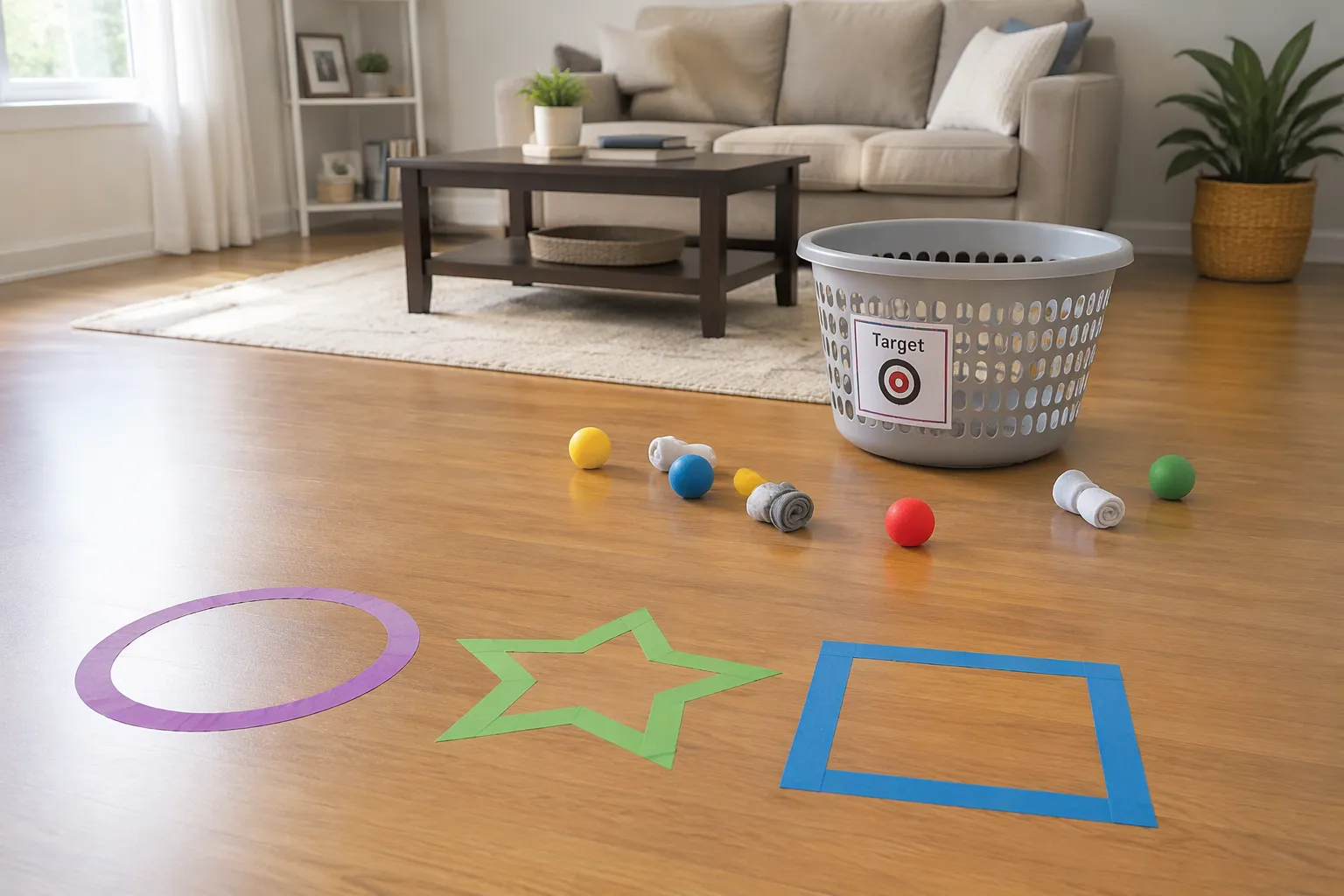
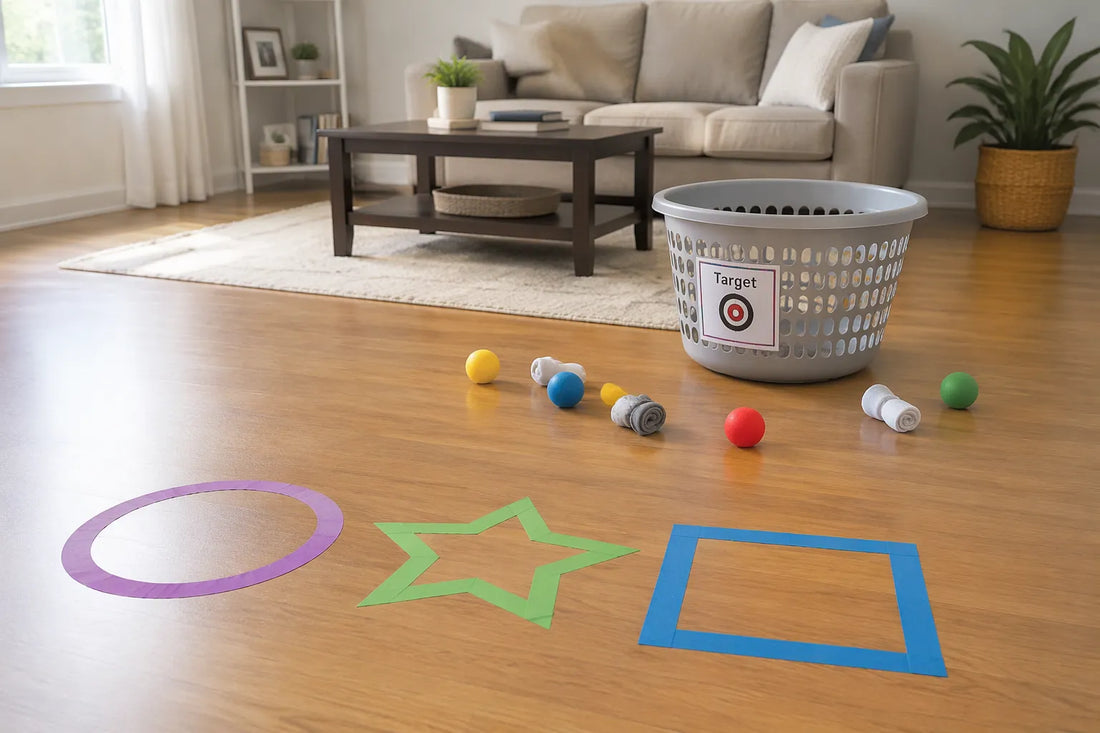
A couple of household items turn a plain room into a play space. These two indoor games need only simple materials and a few minutes of setup. Treat them as independent household ideas — they are not official PlayPop games or built-in features.
Color or Shape Steps
You need non-slip floor markers. Colored paper tape, foam shapes, or sticky notes work well on most floors. Test one piece first to make sure it lifts cleanly and does not slide. Skip anything slippery, and clear the floor of toys and cords before you start.
Lay out four to six markers in a loose row or scattered pattern. Give each one a color or shape. Then call out a prompt: "Step on blue!" or "Find the star!" Your child moves to the matching marker and holds the pose. Take turns calling prompts so everyone gets a turn as leader.
To adjust the pace, call prompts faster for a lively round or slower for a calm one. For more difficulty, add two-step prompts like "red, then circle." For less, use just two markers and one prompt at a time. This works as a solo indoor kids' activity too — your child can hop between markers as you call, or call prompts to themselves. It suits one child or a small group, though a large group needs more markers and more floor space.
Soft-Item Target Toss
Gather a few soft items: rolled socks, foam balls, or small stuffed animals. Set a target a safe distance away — a laundry basket, a cardboard box, or a tape square on the floor. Keep the target low and clear the area around it.
Players take turns tossing one soft item at the target. Count each hit out loud, and reset the items between rounds. No elimination — everyone keeps tossing until the round ends. A partner makes it more social, but one child can play alone by aiming for a personal best.
To adjust difficulty, move the target closer or farther, or use a wider basket for easier hits. For a bigger challenge, try tossing from a seated position or with the non-dominant hand. Choose soft items only, and keep the toss gentle. This is one of those indoor house games that works in a hallway or a small room, though a longer space gives more room for aiming.
Both games pair well with the no-prep indoor children's games above. Rotate them for variety, and you have a full afternoon of indoor play ready. These are some of the best indoor children's games for a quick setup, and they double as a fun indoor kids' activity for siblings or a parent-child pair. Pick suitable materials, clear the floor, and follow any equipment instructions. Adjust each game to your players and your space.
Try Indoor TV Motion Games with PlayPop 8
Some afternoons call for a screen, and that is fine. Motion gaming gives you a third path between the no-prep games above and a quiet movie. PlayPop 8 is one option to consider here, and it sits alongside the non-digital ideas rather than replacing them. The household activities in this article are independent ideas, not official PlayPop games or built-in features.
What You Need to Start
You need a TV and an HDMI connection. Plug the console into your TV with an HDMI cable, and the picture comes up on the big screen. From there, you play without a controller. A 17-point AI body tracking system reads your movements, so your kids just stand in front of the TV and move.
Five starter games come in the box, which gives your family a place to begin on day one. Motion tracking is processed on the device itself. A physical sliding camera cover lets you close the lens when the console is not in use. Follow the product instructions for setup, and adjust each activity to your players and the space you have.
How Play Works for Your Family
Up to four people can play at the same time, depending on the game. That makes it a natural fit for siblings, a parent-child pair, or a small group on a rainy afternoon. Check each game's player count before you start so nobody sits out by surprise.
Want more variety later? An optional GamePass membership opens access to additional games, with quarterly content updates. You do not need it to start. The five starter games are enough to test whether motion gaming suits your kids.
Treat this as one more indoor option in your rotation. Try a round of freeze dance first, then switch to the TV for a few games. Clear the floor, keep the space around players open, and follow the product instructions. Adjust the session to your family and the room you have.
Simple setup is the whole point. You do not need a perfect playroom or a long list of supplies. Any of these indoor active games for kids can start today, right where you are. Your kids can pick a favorite and jump in within minutes.
So choose one game and try it now. A quick round of freeze dance or a few soft tosses is enough to begin. Then, when you want a screen-based option, take a look at PlayPop 8 and see how motion play fits your family.
FAQ
How much space do you need for these games?
Less than you might think. Most of the indoor children's games here need only a cleared patch of floor. Walk the room first and move breakable items out of reach. Motion games need open space around each player, so check your room and follow the product instructions before you start.
What if your kids have mixed skill levels?
Pick games without elimination. Music and Freeze keeps everyone in the whole time, and Soft-Item Target Toss lets you move the target closer for younger players. For the best indoor children's games with mixed ages, adjust the pace or difficulty for each child instead of splitting the group.
Can one child play alone?
Yes. Mirror My Moves works with a video or a set of poses you arrange. Color or Shape Steps suits solo play too, and one child can grow a movement sequence alone. Solo rounds give kids a calm option when siblings are busy or a friend has gone home.
Do you need GamePass to start?
No. PlayPop 8 includes five starter games in the box, so your family can begin right away. GamePass is optional and adds access to more games, with quarterly content updates. Try the starter games first, then decide whether more variety fits your family.